Orvis to offer free Fly Fishing lessons

Orvis and Trout Unlimited are collaborating to offer Fly Fishing 101 and 201 classes this spring.

Free Fly Fishing 101 classes can introduce the family to the sport. All ages may attend, but those under 16 years of age must be accompanied by an adult.

Fly Fishing 101 will be held April 20-21 and 27-28; May 4-5, 18-19 and 25-26; and June 8-9.

At some classes, the Orvis Fly Fishing 101 instructors will be assisted by certified fly casting instructors from the Federation of Fly Fishers. FFF instructors have been trained, tested and certified to be effective teachers of fly casting. This program has more than 1,500 certified instructors around the world.

Those who have taken Fly Fishing 101 are ready for the next step. Fly Fishing 201 includes a  short outing on local water. A fee for the outing may apply. Contact your local store for more information on the outing.

Fly Fishing 201 is scheduled for May 11-12, June 1-2 and June 15-16.

Upon completion of the courses, participants will receive special in-store offers valid toward purchase of Orvis products and a free Trout Unlimited membership a $35 value. Federation of Fly Fishers is offering a free 1-year electronic membership, value of $35.

Information is available at the Orvis store at 432 Boston Post Road in Darien. The store can be reached at 203-662-0844 and is online at orvis.com/darien.

Space is limited in classes. RSVP to Orvis to reserve space.

DEEP extends ban on taking alewives, herring

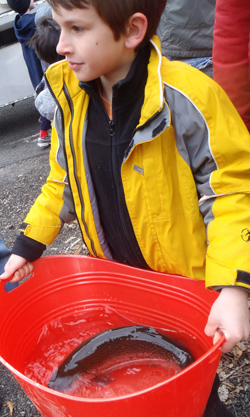
TU-HERRING

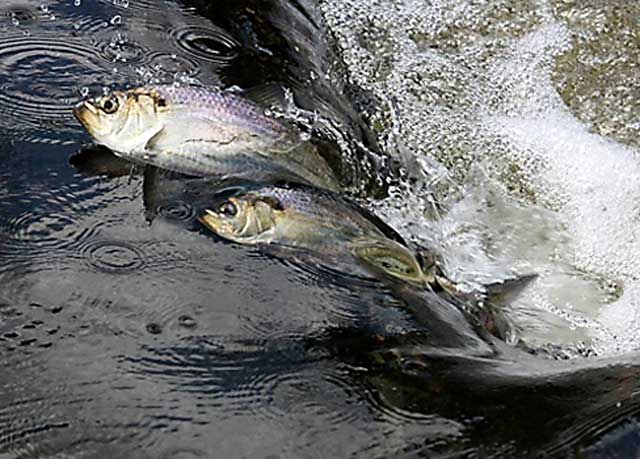
The state Department of Energy and Environmental Protection (DEEP) announced Friday, April 5, that the prohibition on the taking of alewives and blueback herring from most inland and marine waters in Connecticut has been extended for another year.

This action was initially taken in April of 2002, and has been extended each successive year because there has been no improvement in population size during the past year. The current action by DEEP Commissioner Daniel C. Esty extends the prohibition through March 31, 2014.

“Despite the conservation efforts taken by this agency and others over the past decade, the runs of river herring in Connecticut are still diminished,” said DEEP Deputy Commissioner Susan Whalen. “The best available data from this past year indicates that the closure of these fisheries must therefore remain in place.”

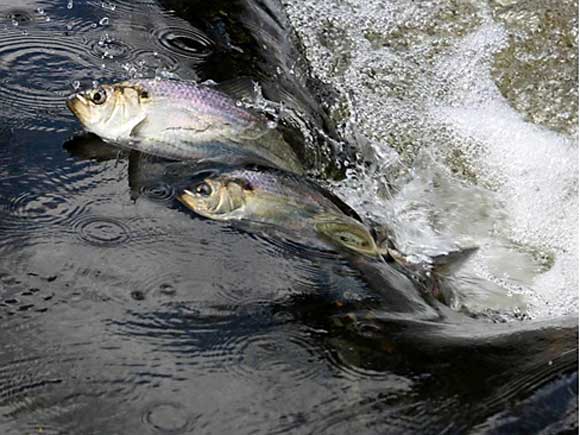
River herring is a term used collectively to refer to alewife and blueback herring. Both species are anadromous, which means they hatch in freshwater, migrate to the ocean to grow, then return to freshwater to spawn. Historically, millions of river herring returned to Connecticut’s rivers and streams each year. More than 630,000 blueback herring were passed over the Holyoke Dam in Massachusetts on the Connecticut River in 1985. By 2006, only 21 passed the Holyoke Dam, the lowest number in the history of the Holyoke Fishlift. Last year that number was only 39. While river herring are not typically consumed by humans, they are important food to many species of freshwater and marine gamefish, as well as osprey, bald eagle, harbor seals, porpoise, egrets, kingfishers and river otter.

“We still are not certain about the exact cause of the decline in river herring runs, but there is no indication that there is a problem with Connecticut’s rivers and streams,” said William Hyatt, Chief of DEEP’s Bureau of Natural Resources “The decline has been observed all along the east coast and the common factor is the ocean and estuaries. There was a renewed effort during 2012 to address this problem and new steps have been taken. We now wait to see if they help.

“One of our top priorities is to protect populations of wild, native fish,” Hyatt said. “We must work with other states and organizations to protect river herring, which cross jurisdictional boundaries. The prohibition is expected to stay in place until monitoring by the DEEP indicates that the population has recovered to the point where it could safely support some level of harvest.”

During the past year, the New England Fisheries Management Council adopted new rules for commercial fishermen in the ocean to minimize river herring by-catch (unintended harvest) in the Atlantic herring fishery off the coast of northeastern states. A ruling by the National Marine Fisheries Service (NMFS) on whether or not to list both species of river herring under the federal Endangered Species Act was expected in 2012 but has now been delayed until 2013.

Non-migratory alewife populations are established in several lakes and ponds in Connecticut. The DEEP prohibition does not include landlocked alewives from Amos Lake, Ball Pond, Beach Pond, Candlewood Lake, Crystal Lake, Highland Lake, Lake Quassapaug, Lake Quonnipaug, Rogers Lake, Squantz Pond, Uncas Pond, and Lake Waramaug. Alewives in these lakes may still be taken by angling and scoop net as established in state statute and regulation.

The DEEP continues its other efforts to enhance river herring stocks by transplanting adult herring from streams with healthy runs into streams where runs have been eliminated or greatly depleted, removing obsolete dams and building fishways that allow fish to migrate past remaining dams. New fishways at the Hallville Dam on Poquetanuck Brook in Preston, the StanChem Dam on the Mattabesset River in Berlin, and the removal of the Rutan Dam on Anguilla Brook in Stonington as of April 1 will open more than 57 additional miles of habitat for river herring in the state.

Share the joy of fishing with at-risk children

Bridgeport Police have raised enough funds to give 300, 10- and 11-year-old at-risk inner city Bridgeport youths a Shakespeare spinning fishing kit (rod, reel, line, bobber and bait). The idea is to give these children a healthy, affordable form of recreation which will enrich their lives and also hopefully keep them away from trouble when school is not in session.

April 20, 9:30 a.m. to 12 p.m. – meet near where the Pequonnock River meets Bunnell’s Pond at Beardsley Park (see beardsleyzoo.org for directions). Volunteers are very much needed to help the 300 kids fish safely and enjoy their first fishing experience. (Rods will have been set up ahead of time and some instruction will already have been provided).

After small trophies are awarded at noon, there will be food and refreshments. Participating children will then receive a free pass to Connecticut’s Beardsley Zoo!

 Folks, we could really use your help here. R.S.V.P. to admin@nutmegtrout.org  or call John at 203-763-4015 . Updates will be at nutmegtrout.org

Ron Merly with a salter brook trout he caught.

Help needed to start salter restoration

The Nutmeg Chapter is proud to announce that it is at the forefront on the historic restoration of sea-run brook trout to Connecticut waters. The Nutmeg and Mianus chapters have collaborated with T.U. National and the Sea-Run Brook Trout Coalition to  donate funds to get the ball rolling for the project, which will begin on Sunday, April 7.

Restoration will begin in Stonington, as there are three streams in close proximity that meet the criteria for restoration. Most of the streams in our area will not be conducive to restoration as they are dammed near the salt water. Salters will not climb fish ladders or fishways.

Volunteers are needed for the installation of data loggers on April 7. All Nutmeg members who can pitch is should meet where Anguilla Brook passes beneath Route 1 in North Stonington at 9 a.m.. TU will also deploy the loggers in Copps and Donahue Brook as well. Please join us.

Nutmeg releases trophy trout into Saugatuck

OLYMPUS DIGITAL CAMERAOn Saturday, March 16, Nutmeg TU, helped by children from the Trout in the Classroom program, released trophy trout at the Doc Skerlick Fly Fishing area on the Saugatuck River.

The fish were set free in a catch-and-release, fly fishing only area.

Thanks to donations from Nutmeg supporters and members, 53 rainbow and brown trout, ranging in length from 18 to 22 inches, were let loose in the Saugatuck.

Click here to view a slideshow from that morning.

Report: Outdoor industry brings $6.9 billion to Connecticut

The Outdoor Industry Association has released figures quantifying the economic impact of outdoor recreation in all 50 states, with a separate report for each state that tallies direct spending, jobs, salaries and tax revenue. This data demonstrates that outdoor recreation is an important driver of state economies, supporting jobs, businesses and communities.

In Connecticut, Americans spend $6.9 billion on outdoor recreation, supporting 70,600 Connecticut jobs, generating $2.2 billion in wages, and producing $502 million in state and local tax revenue. Connecticut offers spectacular outdoor recreation opportunities at treasured destinations, including Bigelow Hollow State Park, the Willimantic River Water Trail and many others, providing the types of outdoor experiences that produce these economic benefits.

The state-by-state figures expand upon a national report OIA published in June 2012, which found that nationally Americans spend $646 billion each year on outdoor recreation, directly supporting 6.1 million jobs and generating nearly $80 billion in tax revenue.

“Outdoor recreation is a growing American industry that produces significant economic benefits,” said Will Manzer, chair of the OIA Board of Directors and former CEO of Eastern Mountain Sports. “For example, Americans spend almost twice as much on outdoor recreation as they spend on pharmaceuticals each year. And outdoor recreation supports more than twice as many jobs as the oil and gas industry.”

Outdoor recreation creates diverse jobs in product development, manufacturing, marketing, logistics, sales, retail, public land management, guiding services and more — and also supports service sector and other jobs when people spend money on trips and travel-related expenses associated with outdoor pursuits.

With nearly 140 million Americans participating in outdoor activities each year, outdoor recreation is a larger and more critical sector of the American economy than most people realize.

The outdoor industry can continue to generate jobs and be an economic driver in the United States if parks, waters and trails are managed as a system designed to sustain these economic dividends for America.

“Outdoor recreation is good for the American economy and our future,” said Frank Hugelmeyer, president and CEO of OIA. “When we invest in the nation’s network of public lands and waters, we are protecting and enhancing outdoor experiences for the benefit of the thousands of businesses, communities and families whose livelihoods depends on the outdoor recreation economy.”

The new data is an expansion to OIA’s 2006 study and tracks direct jobs as well as direct consumer spending on gear, vehicles, trips and travel in 10 activity categories. OIA commissioned Southwick Associates, a research firm that specializes in shooting sports, hunting, angling, natural resource and environmental economics, to perform the research. Motorcycle Industry Council and National Marine Manufacturers Association contributed funding and data to support this study.

The national report as well as a one page fact sheet for each U.S. state is available on the OIA website at outdoorindustry.org/recreationeconomy.

Based in Boulder, Colo., with offices in Washington, D.C., Outdoor Industry Association (OIA) is the leading trade association for the outdoor industry and the title sponsor of Outdoor Retailer. OIA supports the growth and success of more than 4,000 manufacturers, distributors, suppliers, sales representatives, and retailers of outdoor recreation apparel, footwear, equipment and services. For more information, go to outdoorindustry.org.
 

Hearing process to begin on Exide cleanup

The Connecticut Department of Energy and Environmental Protection has begun a hearing process on the proposed Mill River cleanup after receiving more than 150 signatures calling for a review.

Only 25 signatures were needed to force a hearing on Exide’s proposal to remove contaminants from the river near the former car battery factory on the Post Road. Click here to read more.

The permitting process for Exide’s plan is now on hold until a remediation plan is finalized.

First Selectman Michael Tetreau and other town officials recently joined state Sen. John McKinney, Rep. Brenda Kupchick, Rep. Tony Hwang and Rep. Kim Fawcett to discuss the cleanup with state officials in Hartford. (Click here to read coverage.)

Updates will be posted as they become available.

Click here for the DEEP page on the project.

Nutmeg volunteers needed for Operation Fishing Pole

Bridgeport Police have raised enough funds to give 300 10- and 11-year-old at-risk inner city Bridgeport youths a Shakespeare spinning fishing kit (rod, reel, line, bobber and bait). The idea is to give these children a healthy form of recreation to keep them away from trouble, especially when school is not in session.

On Saturday, April 13, from 9 a.m. to noon, Bridgeport Police, in collaboration with the Connecticut DEEP’s CARE volunteers, Beardsley Zoo and Nutmeg TU, will hold a rapid fishing class at the Hanson Exploration Station at Connecticut’s Beardsley Zoo. A minimum of nine volunteers are needed; no prior knowledge is required except for some very basic fishing know-how. Volunteers are asked to arrive at 8 a.m. to help assemble a few rods and to review the lessons (casting, a basic knot tying, fish ID, as well as a very quick overview of basic safety and what the Angler’s Guide is) for the day.

Volunteers will assemble the remaining 280 fishing rod and reel kits after training on April 13.

On April 20, 15 to 20 Nutmeg volunteers are needed when the kids get to go fishing from 10 a.m. to 1:30 p.m. The group will fish near where the Pequonnock River meets Bunnell Pond at Beardsley Park. For safety, there must be one instructor for every three children.

Children will begin to arrive between 8 and 9 a.m., and will fish from 10 a.m. to noon. After trophies are awarded at noon, there will be a barbeque.

Children will receive a free pass to Connecticut’s Beardsley Zoo.

Information can be obtained by emailing admin@nutmegtrout.org. Updates will be at nutmegtrout.org.

Editorial: Take a kid fishing

From The Valley Gazette

The state Department of Energy and Environmental Protection (DEEP) has launched a Youth Fishing Passport program to introduce youth to and connect them with a lifetime of fishing opportunities across Connecticut.

The free program allows youngsters to access fishing information and fishing-related activities and also helps to promote a sense of environmental stewardship at an early age.

Some vendors will offer free products and discounts to passport holders.

Participation is open to anyone under age 16, with permission from parents or guardians. Learn more at ct.gov/deep/yfp.

Here in the Valley, there are numerous opportunities to go fishing. From the Kellogg Center to the Seymour Land Trust’s Legion Pool, there are plenty of opportunities to introduce youngsters to a lifetime hobby.

Locally, most anglers are catch-and-release proponents. But even without a trophy fish to bring home, there are plenty of reasons to go fishing.

It benefits the environment through permit fees and simple awareness and appreciation.

It gets kids out into fresh air for healthy outdoor activity.

It forces you to take time to relax.

Fishing can be a fun way to spend time together as a family, while getting some light exercise and developing an appreciation of the outdoors. Get out and go fishing!

Action needed now to save Kensington Hatchery

Your action is needed no later than Wednesday morning!

This year’s proposed budget calls for the removal of $147,910 specified as the amount necessary to operate the  Kensington  Hatchery!

The following are impacts of the loss of this hatchery:

• Valuable genetic traits defining Connecticut River salmon will be lost forever.

• Trout in the Classroom program may be lost due to the need for chilled water (only available at  Kensington ) during egg development .

• The Salmon-in-Schools program, sponsored by the Connecticut River Salmon Association, would be terminated after this school year which would effect 60-70 schools and some 6,000 students.

• Up to 7000 Atlantic Salmon fishing trips in Connecticut will be lost with the end of the brood stocking program.

• The unique Seeforellen Brown trout will be lost to Connecticut anglers.


Take Action: Write the representatives of the Appropriations Committee. The easy way to do this is below. This takes about 3 minutes.


1.  Got to this link:   http://www.cbia.com/ga/CT_Appropriations_Committee/-AAPP

2.  Select the “Check All” box in the center right of the page. This will check all the “Add to email” boxes on the page

3.  Scroll down and click on the “Next Compose Email” button at the bottom of the page.

4.  On the form that appears enter your personal information and cut and paste the info below into the subject line and the message fields.

5.  Scroll down and click on the “Preview Message” button.

6.  Scroll down and click on the “Send Email Now” button


Subject: Protect the Kensington Hatchery

Recommended Message:

As an angler, cold water conservationist and supporter of youth education, I oppose the cuts to that would close or curtail activities at the Kensington Hatchery. I ask the the subcommittee protect this important resource for anglers, conservationists and the school children of this state.

Thanks for your help.

Chuck