Where do you need a trout stamp?

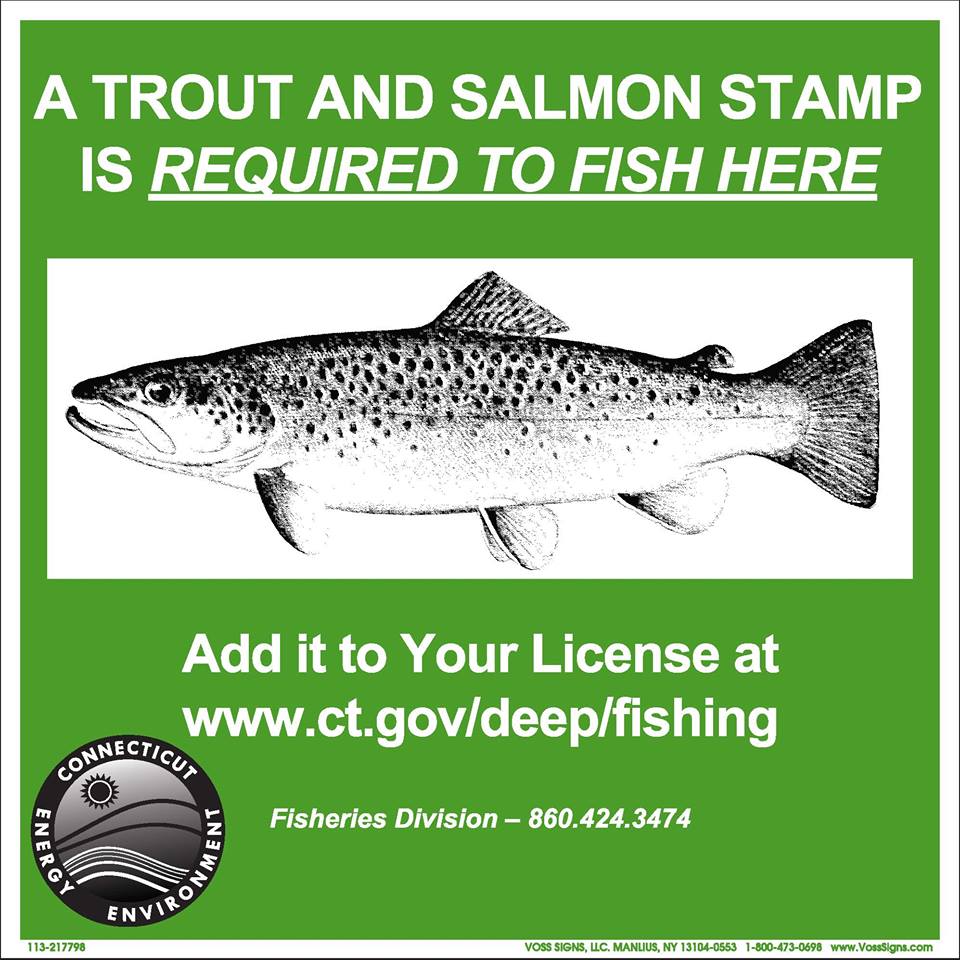
The Connecticut Department of Energy & Environmental Protection recently posted a primer on the trout and salmon stamp on its Facebook page.

A trout and salmon stamp is only REQUIRED TO FISH in a 1. Trout Management Area (these are rivers and streams not lakes), 2. in a Trout Park (mostly ponds and a couple streams) 3. in the Designated Broodstock Salmon Areas on the Nauatuck River and Shetucket River, and finally 4. any Wild Trout Management Area.
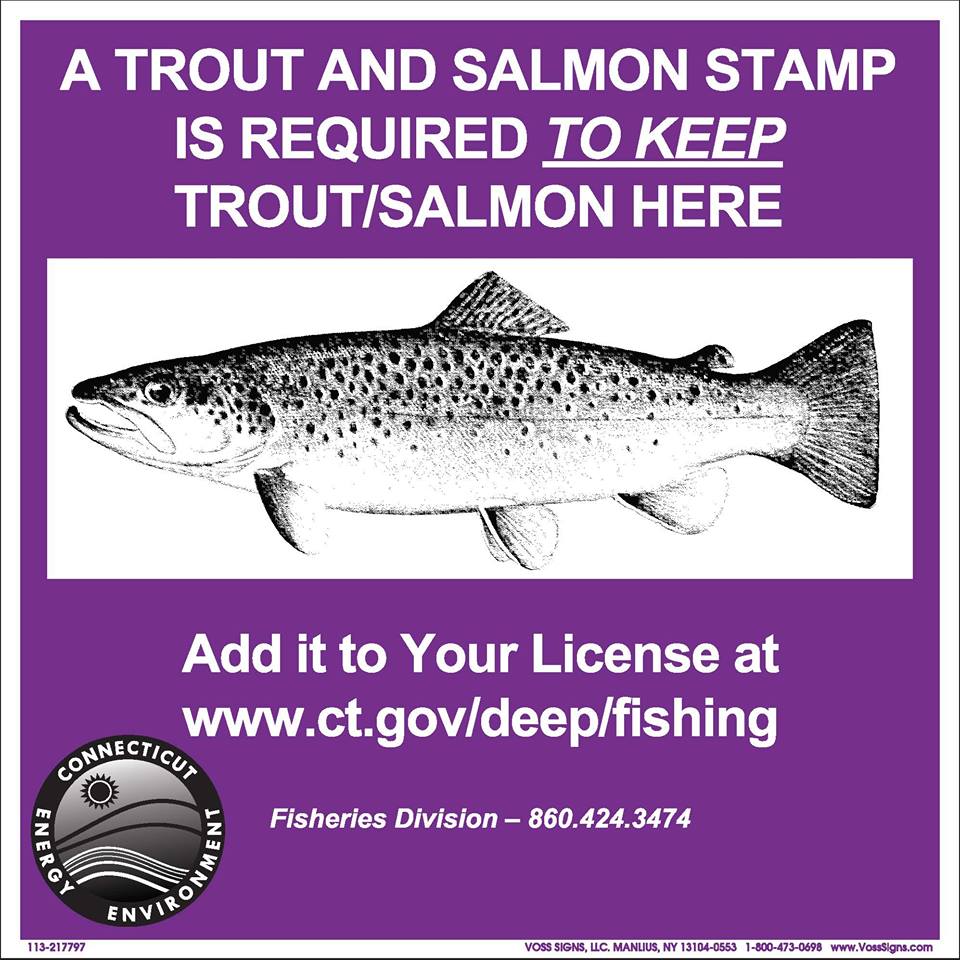
If you are fishing anywhere else then you only NEED to have a trout and salmon stamp if you want TO KEEP trout. It is not needed if you are releasing all of the trout you catch or if you accidentally catch a trout while fishing for something else. This applies to most of the waters the  stock.

Visit the DEEP FAQ page for more scenarios at https://www.ct.gov/…/pu…/Trout_Stamp_Information_and_FAQ.pdf

DEEP names new Chief of Natural Resources

Rick Jacobson has been chosen as the next Bureau Chief for Natural Resources at DEEP. Rick takes over for Bill Hyatt, who retired in October.

Rick brings 37 years of natural resources management experience to the role of Bureau Chief. His entire professional career has been in public service and conservation. As the Director of Wildlife, and former Assistant Director of Inland Fisheries at DEEP, he has experience in the application of management principles in inland and marine fisheries, forestry, and wildlife conservation. Rick has a strong foundation in strategic planning, and leading scientific and professional staff.

He has a long track record of collaborating successfully with partners locally, regionally and nationally on complex natural resource conservation challenges. For example, he has played a key role in implementing the NE Cottontail initiative with five of the six New England states and New York, working closely with the federal government conservation agencies, academics, and DEEP staff to create explicit measurable objectives for the restoration of NE Cottontail.

He will officially assume this new role beginning January 4, 2019. The DEEP plans to post the Director of Wildlife position as soon as necessary approvals are obtained.

State reports strong saltwater fishing

The Connecticut Department of Energy and Environmental Protection says tog fishing is strong in the Long Island Sound, with solid striper fishing in the Housatonic River and in Long Island Sound off local towns.

Click here to read this week’s fishing report.

Tim Barry, supervising fisheries biologist for the Connecticut DEEP

The lives of trout in CT March 20 topic

Tim Barry, supervising fisheries biologist for the Connecticut DEEP

Learn about trout in Connecticut and how they are kept healthy and available for anglers on Tuesday, March 20, at 7 p.m. at Port 5, 69 Brewster St., Bridgeport.

With new regulations including a salmon and trout stamp, plus changes to designations on the Mill River just approved, Nutmeg TU will welcome Tim Barry of the DEEP.

The meeting is open to the public free of charge.

Barry will deliver an update on the pending rewrite of the 20-year-old Statewide Trout Management Plan and how TU figures into the Department of Energy and Environmental Protection’s R3 (Recruitment, Retention, and Re-activation) licensing efforts.

Barry earned a bachelor’s degree in natural resource conservation from the University of Connecticut in 1978 and a master’s degree in fisheries science from the University of Massachusetts in 1983.

From 1978-80 he was a volunteer fish technician for the Peace Corps in Honduras.

After working as an aquatic scientist for Ecosystem Consulting Service in Coventry from 1982 to 1984, Barry joined the DEEP (then the Department of Environmental Protection). He was a fisheries biologist I from 1984-87, a fisheries biologist II from 1987-2012, and in 2012 became a supervising fisheries biologist for the DEEP Fisheries Division.

Barry has worked extensively with species such as trout, northern pike, walleye and largemouth and smallmouth bass on projects throughout the state.

Pizza and beverages are available for purchase.

The DEEP found healthy populations of trout and smallmouth during electrofishing surveys of the Housatonic and Farmington Rivers (DEEP Photo)

Trout stamp on hold for now

Proposed regulations that would require purchase of a trout stamp are on hold at least into February.

The Connecticut Department of Energy and Environmental Protection posted on the Connecticut Fish and Wildlife Facebook page that the regulations had been sent back so some concerns raised by the Legislative Regulation Review Committee could be addressed.

That means continue fishing with a 2018 license until further notice, without the purchase of a stamp.

According to the Facebook post:

“Our regulations package was on the docket at yesterday’s Legislative Regulation Review Committee (LRRC) meeting (January 23). Three of the actions the LRRC can take are, approve, reject without prejudice, and reject with prejudice.

“The LRRC voted to “reject without prejudice” the regulations package, which means that there were some issues that were deemed to be “substantive concerns” that need to be addressed.

“None of the concerns raised affect the content of the regulations, except as to whether there can be a single stamp (for both trout and salmon as DEEP proposed) or two separate stamps (one for trout/kokanee and one for Atlantic Salmon).

“We are currently working on addressing those concerns to the committee’s (and their LCO reviewer) satisfaction so that the package can be resubmitted for approval at the next LRRC meeting (February 27). Stay tuned.

“So for now you can purchase your fishing license as you normally would and fish for trout as you normally would.”

Included in the proposed regulations package is extension of the Mill River Wild Trout Management Area.

Updates will be posted as they become available.

New regulations, stamp still pending

Fishing licenses expire on Dec. 31. New licenses are needed as of Jan. 1 each year.

With changes in regulations, including requiring the purchase of a trout stamp, still pending, the Connecticut Department of Energy and Environmental Protection posted this update.

2018 Inland Fishing Regulation Update: As we ring in 2018, just a simple update to let you know that the proposed changes for the Inland Fishing Regulations (including the Trout Stamp) do not take effect on January 1, 2018.

They do not take effect until formal approval by the Legislative Regulations Review Committee (possibly during their January meeting). We will keep you informed.

To take advantage of the Atlantic salmon stocking in the Naugatuck and Shetucket Rivers and for ice fishing your favorite lake or pond (which is quickly taking shape with this cold snap), buy your license now and add the trout stamp (if you desire) after it becomes available (late January or early February).

New regulations also include reclassification of portions of the Mill River in Fairfield and Easton.

Click the links to read the regulations before the Legislative Regulations Review Committee, and the DEEP’s response and alterations after public comment on the proposals.

$5 trout stamp takes next step

A proposal for a single trout and salmon stamp, costing $5, is part of a new fishing regulations package sent to the state’s attorney general for review.

Once the attorney general completes review of the proposal, it will be submitted to the Legislative Regulation Review Committee for review.

The new proposal would establish a single trout and salmon stamp, which each year would cost $5. The original proposal called for a $5 trout stamp, a $10 salmon stamp, and a $12 combination stamp. After receiving online comments objecting to the fee, the Department of Energy and Environmental Protection opted to proceed with one $5 stamp.

All funds from the sale of the stamp, under state and federal law, will go toward hunting and fishing activities in Connecticut, including maintaining full production at three fish hatcheries in the state. DEEP officials held their earlier estimate of $300,000 in additional revenue, based on 60,000 trout and salmon anglers.

All anglers 16 years of age and older fishing for any species in Trout Management Areas, Wild Trout Management Areas and Trout Parks established in Section 26-112-46 of the Regulations of Connecticut State Agencies; all anglers 16 years of age and older fishing for any species in affected portions (the designated “Broodstock Areas”) of the Shetucket River and Naugatuck River; and any anglers 16 years of age and older wishing to keep trout, kokanee or broodstock Atlantic salmon (where fishing for Atlantic salmon is allowed) they’ve caught anywhere throughout the state would be required to purchase a trout stamp.

The new regulations would also extend the Mill River Wild Trout Management Area in Easton and Fairfield from upstream of the first bridge crossing below Easton Reservoir (South Park Avenue) to the Merritt Parkway, where it meets the existing Trout Management Area that continues to Lake Mohegan. Signs indicate which parts of the river are in the WTMA and which in TMA.

Click here to read the full list of amendments to the regulations.

Click here to read the DEEP’s explanatory statement.

Click here to read the notice of decision.