State reports strong saltwater fishing

The Connecticut Department of Energy and Environmental Protection says tog fishing is strong in the Long Island Sound, with solid striper fishing in the Housatonic River and in Long Island Sound off local towns.

Click here to read this week’s fishing report.

DEEP says fishing should improve this weekend

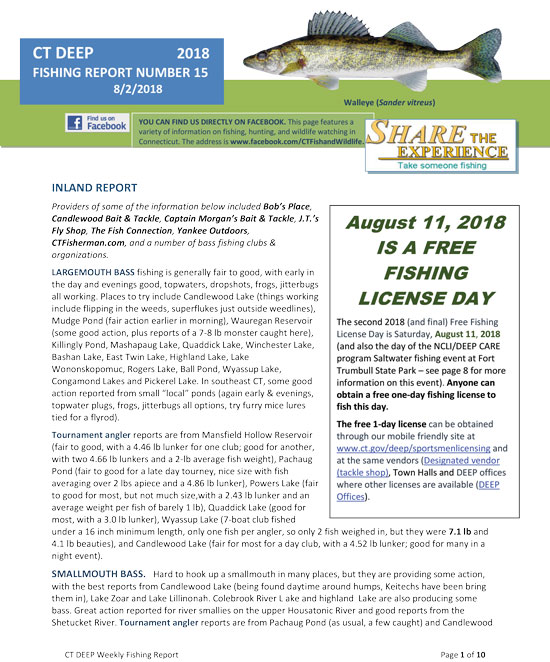
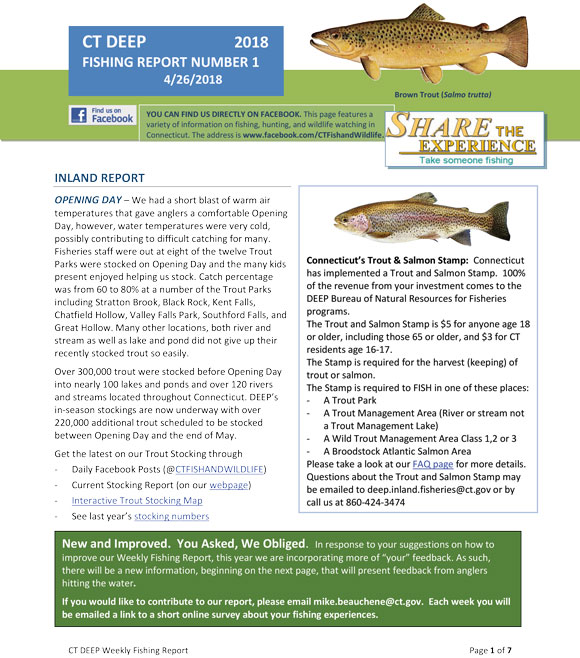
FishRpt15 08-02-2018 Recent rains have refreshed Connecticut rivers to levels not usually seen in August, according to the Aug. 2 issue of the weekly fishing report from the Connecticut Department of Energy and Environmental Protection.

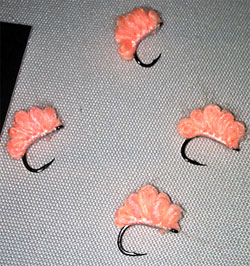
The weekly bulletins also offer river-specific ideas on flies to match the hatch on destinations such as the Housatonic and the Farmington.

Information on fishing for other species, fresh and salt water, is also included.

Aug. 11 is a free fishing license day. Information on that is contained.

There are also tips for curbing the spread of “rock snot” in the Farmington.

Click here to read the full report.

DEEP: Trout seeking cool areas

Trout fishing is expected to be fair this weekend, according to the state Department of Energy and Environmental Protection in its weekly fishing report.

“Conditions for trout fishing remain fair. Water levels are dropping following steep flushing flows from the line of storms earlier this week,” the weekly report reads. “While most of the rivers are entering the summer doldrums – too warm for trout, there are a few here and there. Best bets are to seek out smaller streams and our Wild Trout Management Areas (tend to have good cold flow year round).  Other places to try include the Qunnipiac River (Gorge Area), Salmon River, Scantic River, Mianus River, Norwalk River, Hammonasset River, and Bigelow Brook. As usual very good reports from the Farmington River (West Branch and mainstem) down to Unionville.”

Click here to read the full report.

There’s a chance later this week (on Wednesday, July 25) to fish the Farmington and attend the quarterly meeting of the Connecticut Council of Trout Unlimited. Click here for more information.

Saugatuck TMA stocked with trout

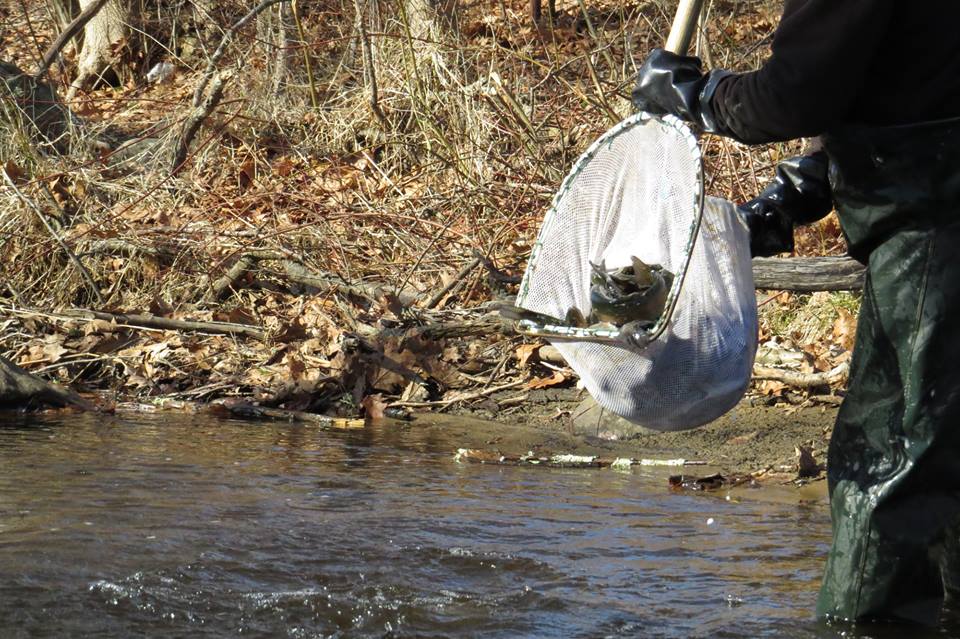
The state has begun stocking trout in advance of the opening of the 2018 season, and stocked the fly-only section of the Saugatuck Trout Management Area Thursday, March 15.

The state offers updates on stocking via the Connecticut Fish & Wildlife Facebook page.

Remember that anglers who keep trout, or who fish in special regulations areas such as Trout Management Areas or Trophy Trout Parks, must purchase a Trout & Salmon Stamp for $5. Click here to read more about the stamp.


Trout & Salmon Stamp now available

New Connecticut fishing regulations went into effect Friday, requiring some anglers to purchase a Trout & Salmon Stamp, and extending the Mill River Wild Trout Management Area and making the Mill River Trout Management Area catch and release all year.

Fees from the Trout & Salmon Stamp will go to the DEEP to support fishing activities.

Highlights of the new regulations include:

TROUT & SALMON STAMP – A trout & salmon stamp is required for any angler 16 years of age and older fishing in a Trout Management Area (TMA), Wild Trout Management Area (WTMA), Trout Park, or Atlantic Salmon Broodstock Area; or keeping trout, Kokanee Salmon or broodstock Atlantic Salmon anywhere statewide (some exceptions for waters not stocked by DEEP that are stocked by another entity). The fees for the Trout & Salmon Stamp are $5 for resident anglers who are 18 and older, $3 for CT residents ages 16 or 17 and $5 for nonresident anglers age 16 and older.  The trout & Salmon stamp is now available for purchase on the Online Sportsmen’s Licensing system. Click here to read answers to frequently asked questions about the Trout & Salmon Stamp.

MILL RIVER WTMA & MILL RIVER TMA (Easton-Fairfield) – The Mill River WTMA is extended downstream to the Merritt Parkway and the Mill River TMA is now catch-and release year round.

FARMINGTON RIVER TMA – A small portion of the West Branch Farmington River in the Riverton area from the intersection of Hogback Road and Route 20 in Hartland downstream to the gas pipeline crossing approximately four-tenths miles downstream of the confluence with the Still River in Barkhamsted will now be closed to all fishing from April First to 6:00 am on the second Saturday in April.

FISHING SEASONS  –  Alexander Lake is open to fishing year round. Baldwins Pond and Green Falls Reservoir are open to fishing from 6:00 am Opening Day through the last day of February.

CATFISH  – There is now a creel limit of 6 Channel Catfish and White Catfish in aggregate per day, except in Beaver Park Lagoon, Birge Pond, Bunnells Pond, Center Springs Park Pond, Freshwater Pond, Keeney Park Pond, Lake Wintergreen, Lakewood Lake, Mirror Lake, Picketts Pond, Rowans Pond, Mohegan Park Pond and Stanley Quarter Pond where the creel limit is 3 catfish per day.

COMMON CARP  – There is now a creel limit of 5 common carp per day, with no more than 1 fish greater than 30 inches in length, except in Trophy Carp Waters (see below).

TROPHY CARP WATERS  – Batterson Park Pond, Connecticut River (including the portions of tributaries open year-round), Squantz Pond and West Thompson Reservoir are designated as Trophy Carp Waters with a one carp per day creel limit and a 26 inch maximum length for Common Carp.

METHODS  – Tenkara fishing (a traditional Japanese method of fly-fishing without a reel) is now allowed in fly fishing areas.

ATLANTIC SALMON BROODSTOCK AREAS   – The period when broodstock salmon gear restriction applies to all species in broodstock areas is now from September 1 to March 31 (inclusive).

TROUT PARKS  – Pasture Pond at the Quinebaug Valley State Trout Hatchery, Plainfield, is now a designated Trout Park with a 2 trout per day creel limit.

 Click here to read the new regulations.
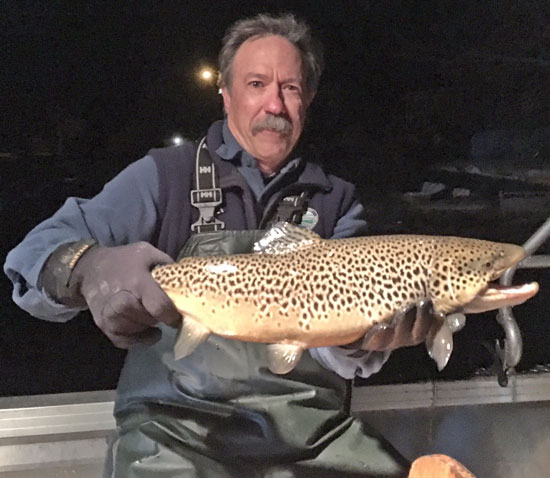
Tim Barry, supervising fisheries biologist for the Connecticut DEEP

The lives of trout in CT March 20 topic

Tim Barry, supervising fisheries biologist for the Connecticut DEEP

Learn about trout in Connecticut and how they are kept healthy and available for anglers on Tuesday, March 20, at 7 p.m. at Port 5, 69 Brewster St., Bridgeport.

With new regulations including a salmon and trout stamp, plus changes to designations on the Mill River just approved, Nutmeg TU will welcome Tim Barry of the DEEP.

The meeting is open to the public free of charge.

Barry will deliver an update on the pending rewrite of the 20-year-old Statewide Trout Management Plan and how TU figures into the Department of Energy and Environmental Protection’s R3 (Recruitment, Retention, and Re-activation) licensing efforts.

Barry earned a bachelor’s degree in natural resource conservation from the University of Connecticut in 1978 and a master’s degree in fisheries science from the University of Massachusetts in 1983.

From 1978-80 he was a volunteer fish technician for the Peace Corps in Honduras.

After working as an aquatic scientist for Ecosystem Consulting Service in Coventry from 1982 to 1984, Barry joined the DEEP (then the Department of Environmental Protection). He was a fisheries biologist I from 1984-87, a fisheries biologist II from 1987-2012, and in 2012 became a supervising fisheries biologist for the DEEP Fisheries Division.

Barry has worked extensively with species such as trout, northern pike, walleye and largemouth and smallmouth bass on projects throughout the state.

Pizza and beverages are available for purchase.

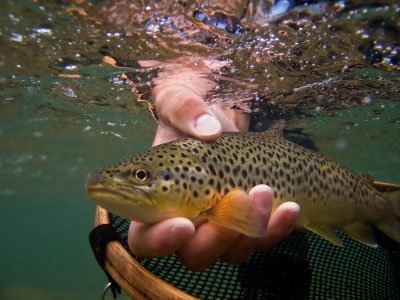
Fish close up

Single trout and salmon stamp, new WTMA approved

Revised fishing regulations, including a trout and salmon stamp, were approved Tuesday by the the state’s Regulations Review Committee.

The regulations will become effective after they are posted on the secretary of the state’s website.

The initial proposal called for separate trout and salmon stamps that could be purchased individually or in combination. That proposal was replaced by one mandating a single stamp for either trout or salmon, at a cost of $5; that was sent back for revision, resulting in the now-approved trout and salmon stamp which is $5, $3 for anglers 16 and 17 years old. Any anger who must obtain a license, regardless of if the license is free, must purchase the stamp.

A trout and salmon stamp is required for any angler 16 years of age and older fishing in a Trout Management Area (TMA), Wild Trout Management Area (WTMA), Trout Park, or Atlantic Salmon Broodstock Area; or keeping trout, Kokanee salmon or broodstock Atlantic salmon anywhere statewide.

The Mill River WTMA in Easton and Fairfield is extended downstream to the Merritt Parkway and the Mill River TMA is now catch-and-release year-round.

A small portion of the West Branch Farmington River in the Riverton area from the intersection of Hogback Road and Route 20 in Hartland downstream to the gas pipeline crossing approximately four-tenths of a mile downstream of the confluence with the Still River in Barkhamsted will now be closed to all fishing from April 1 to 6 a.m. on the second Saturday in April. This is intended to restore excitement to Opening Day.

Alexander Lake in Killingly is open to fishing year-round. Baldwins Pond in Meriden and Green Falls Reservoir in Voluntown are open to fishing from 6 a.m. Opening Day through the last day of February.

There is now a creel limit of six channel catfish and white catfish in aggregate per day, except in Beaver Park Lagoon, Birge Pond, Bunnells Pond, Center Springs Park Pond, Freshwater Pond, Keeney Park Pond, Lake Wintergreen, Lakewood Lake, Mirror Lake, Picketts Pond, Rowans Pond, Mohegan Park Pond, and Stanley Quarter Pond, where the creel limit is three catfish per day.

There is now a creel limit of five common carp per day, with no more than one fish greater than 30 inches in length, except in Trophy Carp Waters. Batterson Park Pond, Connecticut River (including the portions of tributaries open year-round), Squantz Pond, and West Thompson Reservoir are designated as Trophy Carp Waters with a one-carp-per-day creel limit and a 26-inch maximum length for common carp.

Tenkara fishing, a traditional Japanese method of fly-fishing without a reel, is now allowed in fly fishing areas.

The period when broodstock salmon gear restriction applies to all species in broodstock areas is now from Sept. 1 to March 31 (inclusive).