Saugatuck TMA stocked with trout

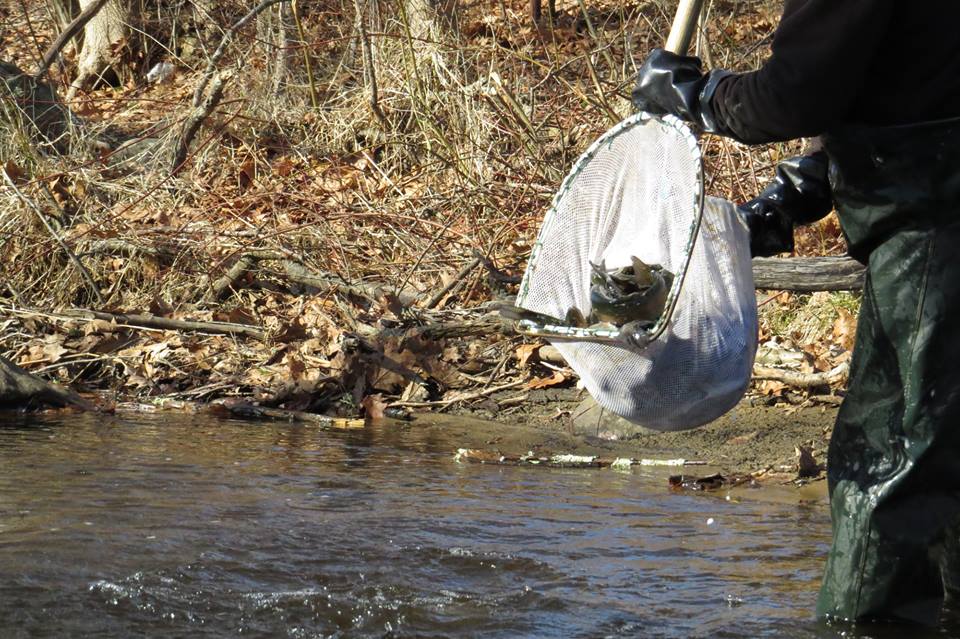
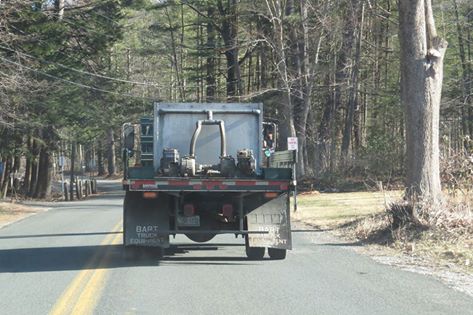
The state has begun stocking trout in advance of the opening of the 2018 season, and stocked the fly-only section of the Saugatuck Trout Management Area Thursday, March 15.

The state offers updates on stocking via the Connecticut Fish & Wildlife Facebook page.

Remember that anglers who keep trout, or who fish in special regulations areas such as Trout Management Areas or Trophy Trout Parks, must purchase a Trout & Salmon Stamp for $5. Click here to read more about the stamp.


Local rivers stocked with trout

UPDATE: The Mill River, the Saugatuck River fly fishing area and the Mianus River TMA have all been stocked with trout, the Connecticut Department of Energy and Environmental Protection reported on Nov. 1.

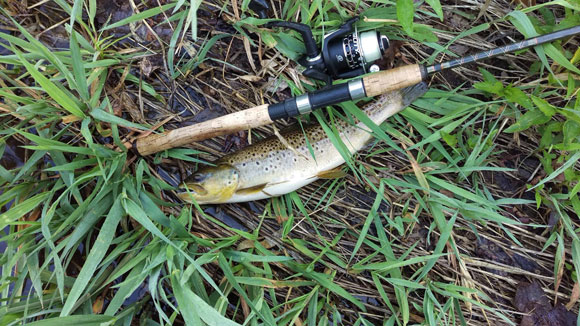
ORIGINAL POST: The Mill River in Fairfield and Saugatuck River in Westport should soon be stocked, according to the Connecticut Department of Fish & Wildlife. Most of the trout stocked will be rainbows, not browns as pictured.

Cooler weather has allowed the fall stocking program to get into full swing, according to the latest weekly fishing report. Click here to read it.

Stay up to date with daily stocking posts on Facebook, the DEEP’s interactive trout stocking map, and its stocking report.

Connecticut Department of Energy and Environmental Protection photo

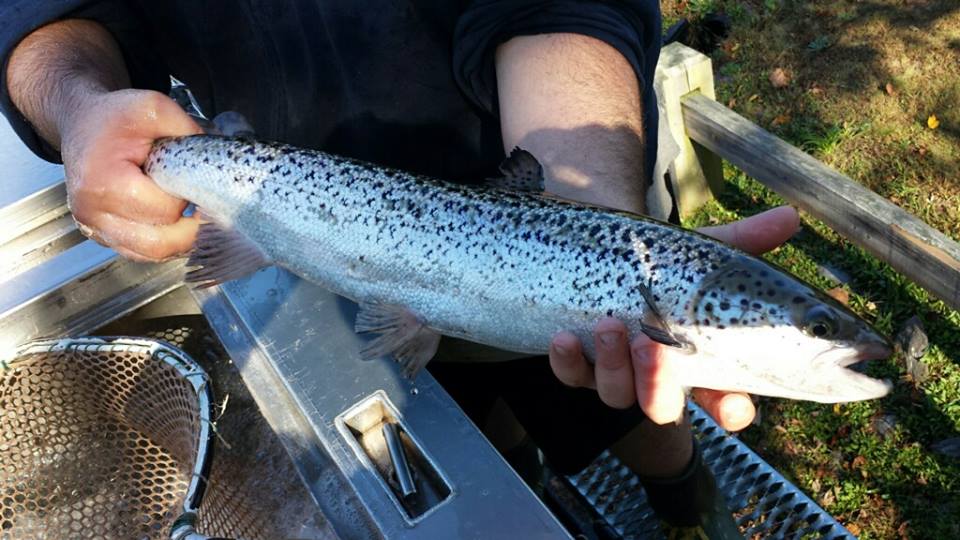
State starts stocking salmon

Connecticut Department of Energy and Environmental Protection photo

Connecticut has begun its surplus  broodstock Atlantic salmon stocking program for the fall.

To learn how to catch salmon locally, hear Ben Bilello speak at the Nutmeg TU general meeting Tuesday, Oct. 17, at 7 p.m. at Port 5, 69 Brewster St., Bridgeport. Click here for more details.

Trout are also being stocked around the state, according to the Oct. 12 fishing report from the Department of Energy and Environmental Protection.

Fall trout stocking begins

In its most recent fishing report, the Connecticut Department of Energy and Environmental Protection announced that temperatures have cooled enough to allow fall trout stocking to being.

Click here to read the latest fishing report.

Stay up to date with daily stocking posts on Facebook, the DEEP’s interactive trout stocking map, and its stocking report.

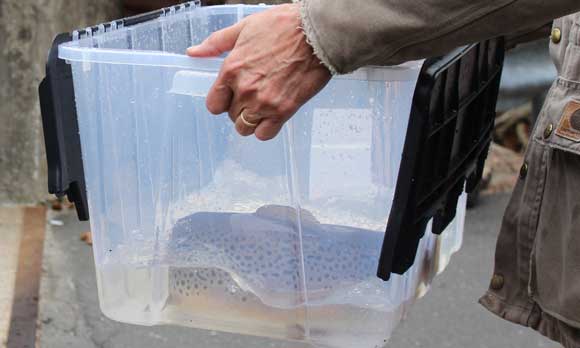
The DEEP is stocking local waters. (DEEP Photo)

High temperatures put stocking on hold

The state DEEP, in this week’s fishing report, says that fall stocking remains on hold due to the record warm temperatures  early this week.

The DEEP is monitoring the conditions and as soon as possible, trucks will be stocking.

Stay up to date with daily stocking posts on Facebook, the DEEP’s interactive trout stocking map, and its stocking report.

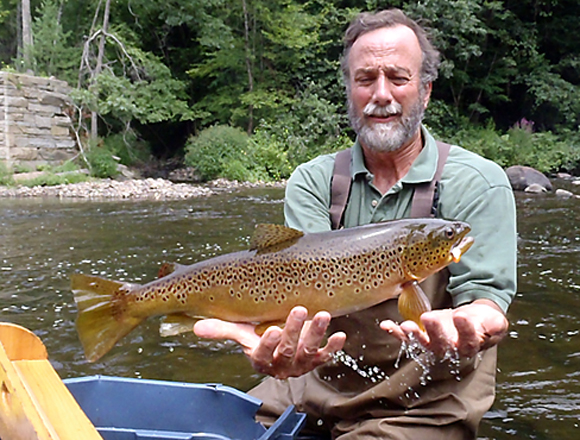
Mike Humphreys of the Department of Energy and Environmental Protection with a 22-inch wild brown on the Shepaug

DEEP biologist to speak March 24

Mike Humphreys of the Department of Energy and Environmental Protection with a 22-inch wild brown on the Shepaug

Mike Humphreys, the DEEP Inland Fisheries Biologist for the western district, will be the speaker at the March meeting of Nutmeg TU, set for Tuesday, March 24, at 7 p.m. at Port 5, 69 Brewster St., Bridgeport.

Mike is a longtime fish biologist, holding an master’s degree from the University of Tennessee with more than 30 years in his profession.

In past 25 years with the Connecticut Department of Energy and Environmental Protection, his work has focused on Statewide Stream Electrofishing Surveys, a Statewide Wild Trout Research and Management Project, and Housatonic River Research and Management.

Mike will be talking to us about his findings on trout survival with run of river in the Housatonic TMAs, various fish stocking programs, and regulation changes for some sections of the Mill River.


Trout stocking under way

Connecticut’s Department of Energy and Environmental Protection (DEEP) announced March 31 that expects to stock almost 390,000 trout in waters across the state in time for opening day of the trout fishing season April 19 despite challenges posed by extended winter conditions this year.

“Stocking nearly four hundred thousand fish prior to opening day is a monumental task in the best weather,” said Pete Aarrestad, director of DEEP’s Inland Fisheries Division. “We’ve had to postpone several days of stocking due to morning temperatures in the single digits, and a number of other scheduled stocking runs were shifted to sites with better winter access.

“However, we still plan to stock all of the usual water bodies that have historically been done for opening day.  Hatchery staff have endured and prevailed under prolonged winter conditions unseen in Connecticut in over 50 years. It is a testament to their ‘can do’ attitude and dedication on behalf of recreational anglers.”

More than 200 truckloads of trout are scheduled to be released into 100 lakes and ponds and 194 rivers and streams in time for opening day. The following species & sizes will be stocked prior to opening day:

• 62,600 brook trout (10-11 inch)

• 193,500 brown trout (10-11 inch)

• 6,600 brown trout (12 inch)

• 1,900 tiger trout (10-12 inch brook/brown hybrid)

• 107,300 rainbow trout (10-12 inch)

• 15,900 rainbow trout (12-14 inch)

• 1,335 surplus broodstock (3-10 pound trout – all species)

Trout anglers looking to test out their gear prior to the start of trout season can visit one of the state’s 15 trout management areas (TMAs), all open for pre-season catch-and-release fishing. TMAs are located on the Farmington River, Hammonasset River, Hockanum River, Housatonic River (two TMAs), Mianus River, Mill River (Fairfield), Mill River (Hamden), Moosup River, Pequabuck River (including Coppermine Brook), Naugatuck River, Salmon River, Saugatuck River, Willimantic River and Yantic River.

Typically, DEEP stocks nearly all these areas as soon as they are accessible by the hatchery trucks. This year, however, due to snow cover, frozen snow banks and shoreline ice cover, a number of the TMAs were inaccessible, thus stocking them had to be postponed. “Barring more winter weather, we plan on having most of the Trout Management Areas stocked by the end of next week,” said Aarrestad.

Anglers can access up-to-date information about where and when trout are stocked on Facebook at facebook.com/ctfishandwildlife.

In addition to the TMAs, class I wild trout management areas (WTMA) are also open year-round for catch-and-release fishing, and are located on Deep Brook, Eightmile River, Hawleys Brook, Beaver Brook/Merrick Brook, Macedonia Brook, Mill River (in Easton), Quinnipiac River, Tankerhoosen River, and Wachocastinook (Riga) Brook. Class I WMTA’s are typically not stocked. Additionally, downstream portions of six of the designated sea-run trout streams (Eightmile River, Farm River, Hammonasset River, Latimer Brook, Saugatuck River, and Whitford Brook) are open year-round with a two trout per day creel limit and a fifteen-inch minimum length.

Anglers should consult the Conncticut Angler’s Guide for detailed information on specific locations and angling regulations.  Printed versions of the 2014 Angler’s Guide are now available at more than 350 locations statewide, including town halls, bait & tackle shops and other vendors selling outdoor equipment, DEEP facilities, and commercial marinas and campgrounds. The electronic versions of the Guide can be found on the DEEP website at (ct.gov/deep/anglersguide).

Additional fishing and fisheries related information can be found on the DEEP web site at ct.gov/deep/fishing. The web site has a wealth of information including; trout stocking location maps, annual fish stocking summary report, the very popular youth fishing passport program, and when you catch the big one, criteria for trophy fish awards.

Save the last-minute running around and purchase your 2014 fishing licenses directly online, or if you prefer, at one of the many participating town halls, tackle retailers and DEEP offices. For a complete list of vendors, visit the DEEP website (ct.gov/deep/fishing) or call DEEP Licensing and Revenue (860-424-3105).

Connecticut begins spring trout stocking

Connecticut DEEP Inland Fisheries staff began the 2013 spring trout stockings this week. Among the areas scheduled to be stocked sometime in the next two weeks are many of the  state’s Trout Management Areas (TMAs).

Early spring stockings are very dependent on weather and site conditions. (Click here for trout stocking maps.)

As of March 1, fishing season is closed on many rivers and streams, and at a number of lakes and ponds.

All 16 of the state’s Trout Management Areas remain open year-round, but all are catch-and-release only during winter and early spring.

Class I Wild Trout Management Areas are also open year-round for catch-and-release fishing.

Broodstock salmon at the Kensington State Fish Hatchery are spawned to provide eggs for the Connecticut River Atlantic salmon Restoration Program. The surplus broodstock DEEP is stocking in 2012 range in size from 2 to 15 pounds each.

State stocks brookstock salmon

The Department of Energy & Environmental Protection (DEEP) has begun its 2012  autumn stockings of broodstock Atlantic salmon.

DEEP’s Inland Fisheries Division  recently released 700 salmon into the Naugatuck River, Mount Tom Pond and Crystal Lake  (Ellington). Another 300 salmon were released into the Shetucket River.
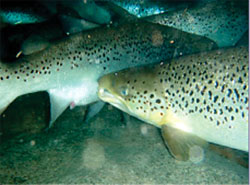
Broodstock salmon at the Kensington State Fish Hatchery are spawned to provide eggs for the Connecticut River Atlantic salmon Restoration Program. The surplus broodstock DEEP is stocking in 2012 range in size from 2 to 15 pounds each.The broodstock Atlantic salmon stocked in Connecticut were raised in state hatcheries to  provide eggs for the Connecticut River Atlantic Salmon Restoration Program and are the progeny of sea-run fish that returned to the Connecticut River.  Beginning in 1992, surplus and spawned fish have  been made available to provide a recreational fishery for Connecticut anglers.

Atlantic salmon are renowned for their size, beauty and fighting ability.

“The broodstock Atlantic salmon program has become quite popular, and catching one of these large leapers provides a  thrilling experience for anglers” said Peter Aarrestad, Director of DEP’s Inland Fisheries Division.

Crystal Lake was stocked Thursday, Sept. 27, with 200 salmon.

On Friday, Sept. 28, Mount Tom Pond was stocked with 100 salmon and the upper Naugatuck River was stocked with 200 salmon.

DEEP planned to stock the Shetucket River with 300 salmon on Monday, Oct. 9, following completion of repairs to the Scotland Dam by FirstLight Power Resources.

This first group of broodstock Atlantic salmon being released range in weight from 2 to 6 pounds  each. Later in October, several hundred additional fish may also be available for stocking. These fish will range from 2 to 15 pounds each. Following spawning later this fall, DEEP expects an additional 800 to 1,000 salmon from the Kensington Hatchery will be available for stocking in November. These fish will range in weight from 4 to 15 pounds each.

Atlantic salmon broodstock stocked in the Shetucket and Naugatuck rivers are typically released into three designated Atlantic Salmon Broodstock Areas: 1) between Scotland Dam (Scotland) and Occum Dam (Norwich) on the Shetucket River; 2) the “Campville Section” of the upper Naugatuck River from Route 118 downstream to the Thomaston Flood Control Dam (Litchfield-
Thomaston); and 3) the “Beacon Falls Section” of the lower Naugatuck from Prospect Street (Naugatuck) downstream to Pines Bridge Road (Route 42 bridge, Beacon Falls).

Anglers are allowed to fish for salmon in the Naugatuck River from the confluence of the East and West Branches (Torrington) downstream to the Housatonic River (Derby). Anglers may also fish for Atlantic salmon in the Housatonic River downstream of Derby Dam.

On the Shetucket River, anglers can fish for salmon downstream from the Scotland Dam (Windham) to the Water Street Bridge
in Norwich (the first bridge upstream of Norwich Harbor). In the Naugatuck, Housatonic and Shetucket Rivers, angling for Atlantic salmon is restricted to catch-and-release only from Oct. 1 through Nov. 30. From Dec. 1, 2012, through March 31, 2013, the daily creel limit for Atlantic salmon will be one.

During the open season in the rivers, the legal method for taking Atlantic salmon is limited to angling using a single fly, or an  artificial lure with a single free swinging hook. No additional weight can be added to the line above the fly or lure.

Also, from October 1st through March 31st, fishing for other species in the designated Atlantic Salmon Broodstock Areas is restricted to the gear legal for Atlantic salmon.

In 2007 DEEP began stocking selected lakes with broodstock Atlantic salmon. This fall, Mount Tom Pond and Crystal Lake are again being stocked. This past spring, 600 smaller (1- to 2-pound fish) were stocked into Long Pond (Ledyard/North Stonington) Crystal Lake, Mount Tom Pond and Nells Rock Reservoir (Shelton). Anglers may also occasionally catch salmon that have held over from
previous stockings of Beach Pond and Mashapaug Lake.

The regulations for broodstock Atlantic salmon released into lakes and ponds are different from the regulations for salmon in the Naugatuck, Housatonic and Shetucket rivers. In each lake, the regulations for methods, seasons and minimum lengths for salmon are the same as for trout in that specific water body but the daily creel limit is one salmon per day. The specific regulations for  salmon fishing in lakes that have been stocked with Atlantic salmon can be found in the 2012 Connecticut Angler’s Guide and below.

The regulations for broodstock Atlantic salmon stocked into lakes and ponds will also be posted at each body of water. Anglers can also contact DEEP’s Inland Fisheries Division (860-424-FISH) for more information.

All other regulations, including those for broodstock salmon in the Naugatuck, Housatonic and Shetucket rivers, can also be found in the 2012 Connecticut Angler’s Guide, found at www.ct.gov/deep/anglersguide. Print versions of the guides are available from many Town Clerks and bait and tackle stores, or by contacting DEEP’s Inland Fisheries Division (860-424-FISH).

Additional fishing and fisheries related information, including the Weekly Fishing Report, can be found on the DEEP web site at: ct.gov/deep/fishing.

Fisheries and Wildlife can now be found directly on Facebook at .facebook.com/CTFishandWildlife. The page features a variety of information on fishing, hunting, and wildlife watching in Connecticut.

This fall, anglers can find updates on DEEP’s broodstock Atlantic salmon stockings and news fall trout stockings in both the Weekly Fishing Reports and on the Fisheries and Wildlife Facebook page.

Lakes
Regulations for Atlantic salmon fishing in Crystal Lake (stocked this fall), Mount Tom Pond (stocked this fall), Long Pond (last stocked-April, 2012) Nells Rock Reservoir (last stocked-April, 2012), Beach Pond (last stocked- 2009) and Mashapaug Lake (last stocked-2009) are as follows:
Crystal Lake
Legal Methods: Angling and Ice Fishing – Fishing with hook and line. May include fishing with bait, flies or lures.
Open Season: Third Saturday in April through last day in March.
Minimum Length: Salmon must be greater than or equal to 16 inches to keep.
Daily creel limit: 1 Atlantic salmon

Mount Tom Pond, Beach Pond*, Long Pond**, Mashapaug Lake*, Nells Rock Reservoir**
Legal Methods: Angling and Ice Fishing – Fishing with hook and line.  May include fishing with bait, flies
or lures.
Open Season: Third Saturday in April through last day in February.
Minimum Length: None
Daily creel limit: 1 Atlantic salmon

*Beach Pond and Mashapaug Lake are not being stocked with broodstock salmon this fall. Both lakes have been stocked previously, most recently in April, 2009.

**Long Pond and Nells Rock Reservoir are not being stocked with broodstock salmon this fall. Both lakes were stocked in April, 2012 with small (1-2 pound) surplus Atlantic salmon.