Tom Johnson helped restore native habitat to the Mill River Oct. 6.

New life along the Mill River

Great day down on the Mill River Saturday, Oct. 6. We started at 8:30 a.m., finished up around 12:30 p.m. and had perfect weather for planting.
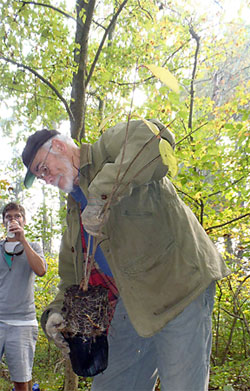
Tom Johnson helped restore native habitat to the Mill River Oct. 6. Roughly 15 folks attended, evenly split between volunteers from TU and ALT. From TU, we had myself, Ron Merly, Bob Campbell, Alan Boyd, Rich Rosen, David Winkelmann, Nick Campofranco and John Kovach. From ALT we had Bob Fatherly, Tom Johnson, Wendy Macbeth, Donna Naser, and Stuart Richardson. (My apologies if I neglected to mention anyone.)

Dave Anderson from New England Wetland Plants was also there. He supplied all of the plants and volunteered his time to help with the planting.

We started the day by splitting into two groups, one for invasive removal and one for planting.  As the day progressed it became all hands on deck for planting. We planted 450 trees, shrubs and plants!

Notable species include (common names): Tulip poplar, sycamore, witch hazel, hornbeam, red-osier dogwood, gray dogwood, silky dogwood, arrowwood viburnum, swamp rose, buttonbush and several species of willow.

Additionally, we were able to preserve several pre-existing American beech, sassafras, black birch and spice bush saplings that would have likely been overcome by all of the invasives.

The area looks great, albeit a little barren, but I fully expect it will start to fill out come spring as many of the species begin to take root and expand their profile. Visitors to the area will note a large amount of deer fencing erected around the perimeter of the main

planting area. This is designed to limit both human and wildlife traffic and hopefully give the plantings an optimal chance for survival.

Going forward we will need to monitor the progress of the plantings and continue to work on the invasive removal. One obvious thing was that the wild grape, multi-flora rose and Japanese barberry continue to remain heavily rooted in the area and several plants had bounced back from our May removal efforts. We will probably need to get a small group out there again in the spring to keep it clean.

Feedback on the project and the results are appreciated. I hope this is the first of many steps in our Mill River Improvement Project.

Many thanks to all those who participated and I look forward to working with everyone again on the next event.

Nutmeg TU unveils new website

News about Nutmeg TU events, hatch charts, fly recipes and detailed information about Fairfield County rivers are among the features on nutmegtrout.org, the new website for Nutmeg Trout Unlimited Chapter 217.

News about chapter events and items and issues of interest to members will appear on the frequently updated home page.

Officers and directors can be contacted with a click of the mouse from a directory.

Anglers looking for a new place to fish can find out how to get there, where to park and what to tie on the end of a leader in the Fishing section. Those who don’t want to fish alone can reach out and find friends to wet a line with.

Hatch charts detail what’s on the trout’s menu any time of year, and the flies section can help match the hatch.

A key to the site is interactivity. Members are needed to contribute information about places to fish, favorite fly patterns and links to articles they want to share with other members.

And once the fly tied to match the hatch is successful, submit a picture of your catch to the rest of TU’s members to see.

The site will evolve, as all successful sites do. Share ideas and submissions with admin@nutmegtrout.org.

James Prosek to speak at Explorers Club

James Prosek will speak at the Explorers Club in New York City Monday night, Nov. 19.

If anyone is interested in attending, click here for a link to more info and reservations.

Closer to home, James is speaking at the Dec. 18 TU meeting, which will be held at Vazzy’s 19th Hole at the Fairchild Wheeler Golf Club.

TU offers free memberships for women

If you’re a female angler who has been waiting for a compelling reason to join Trout Unlimited—or if you just haven’t gotten around to it—here’s an offer you can’t pass up. In an attempt to build up its female community, TU is offering a free one-year membership.

The offer is open to new members only.

Click here for details

Dredging of sections of the Housatonic River began as Hurricane Sandy subsided. This will be the first time the river has seen significant dredging since 1976.

Housatonic River to be dredged

Dredging of sections of the Housatonic River began as Hurricane Sandy subsided. This will be the first time the river has seen significant dredging since 1976.

It will take about a month to move 50,000 cubic yards of silt and deepen the channel in the Housatonic River.

It took more than a decade to dredge through the process of making it happen.

“For 13 years we’ve been working on this,” Bill Rock, chairman of the Stratford Waterfront and Harbor Management Commission, said.

http://www.stratfordstar.com/news/stratford-features/local-news/74757-housatonic-river-dredging-set-for-end-of-month.html

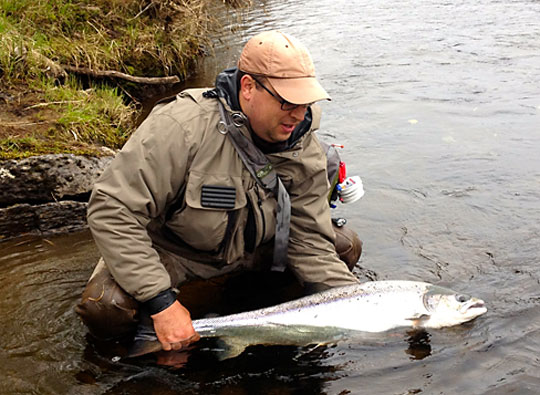
Ben Bilello with a salmon he caught

Traditional tactics for broodstock salmon Nov. 20

Ben Bilello

For Connecticut anglers, broodstock Atlantic salmon fishing is one most reliable ways to catch a large fish in fresh water. For anglers who fish for sea-run Atlantic salmon in Canada or Europe, the broodstock fishery is a good way to practice presentation close to home. For anglers new to Atlantic salmon fishing, this fishery is a great way to learn the techniques used to catch Atlantic salmon around the world.

Ben Bilello discuss “Traditional Methods for Catching Broodstock Atlantic Salmon” with Nutmeg TU Chapter 217 Tuesday, Nov. 20,

Topics covered include:
• Locations of the fishery (Shetucket and Naugatuck Rivers)
• Regulations
• Equipment: fishing with one and two handed/switch rods
• Identifying salmon lies and typical holding water
• Salmon behavior
ˆ• Fishing strategies: wet and dry fly
• Fishing in a rotation
• Fly selection
• Fighting, landing and the safe release of salmon

An 11-page handout is provide for each club member. The handout outlines the covered topics, includes fly recipes, and has resources for learning about Atlantic salmon fishing and fly tying.

When he’s not behind a set of drums in a concert hall, jazz club, or recording studio, Ben Bilello can be found either on the water or behind the vise. While he’s an avid trout fisherman and fly tyer, Ben’s true fly fishing and tying passion is the Atlantic salmon. Ben has spent several seasons chasing sea-run Atlantic salmon in New Brunswick, Nova Scotia, and Russia; landlocked Lake Ontario Atlantic salmon in New York and broodstock Atlantic salmon at home in Connecticut.

A collection of Ben’s classic and artistic salmon flies are featured in Michael Radencich’s new book “Classic Salmon Fly Patterns: Over 1700 Patterns From the Golden Age of Tying.” Ben’s work can be seen at his website benbilello.com/salmonfliesand on his salmon fly blog theleaper.blogspot.com.

Orvis, TU National working to open 1,000 miles of water

Orvis and Trout Unlimited have announced the first two streams that will be improved to allow better passage for wild and native trout as part of the new Orvis / Trout Unlimited “1,000 Miles Campaign.”

Murphy Brook in Vermont and Tabor Brook in New Hampshire—both tributaries of the Connecticut River system—will be the first beneficiaries of funding raised by Orvis and its customers, and TU will oversee construction and reconnection projects on both streams. Migration-halting culverts will be replaced, and dozens of new miles of habitat will be available to brook trout and brown trout that need intact coldwater habitat to spawn and to escape the worst of summer’s heat.

Thanks in part to an Orvis grant and matching funds from the company’s customers, the two entities hope to open up 1,000 miles of new coldwater habitat to trout and salmon all over America. Many streams with spawning and rearing potential—and fishing potential—are now blocked by faulty culverts and other man-made barriers. The campaign’s goals include not only increasing overall trout habitat from coast to coast, but improving fishing opportunity resulting from stream improvements.

“Opening up 1,000 miles of new habitat for trout and salmon over the next 10 years is an ambitious goal, but we think we can do it,” said Elizabeth Maclin, TU’s vice president for eastern conservation. “We’re lucky to have dedicated partners like the people at Orvis—they’ve always been very supportive of the work we do, and their commitment to this project means the world to us.”

By opening up habitat in Murphy Brook and Tabor Brook to migrating fish, anglers will likely see improved fish numbers in downstream stretches of water, and enjoy more fishable water in the coming years. Two culverts will be replaced on Tabor Brook this fall, and work to remove a culvert that blocks upstream migration on Murphy Brook will begin later in the year.

The 1,000 Miles Campaign will help fund culvert removal projects on several other trout streams located all over America. These streams are:

  • Kinne Brook, a tributary to the Westfield River in Massachusetts
  • Coyner Springs, a tributary to the South River near Waynesboro, Va.
  • Crazy Creek, a tributary to the Crooked River in the Upper Deshutes River drainage in Oregon
  • Aldrich Brook, a tributary to Azizchos Lake and the Magalloway River in Maine
  • Yellow Creek, a tributary to the Bear River in southwest Wyoming
  • Big Slough Creek, a Driftless Areas stream in Jackson County, Wisc.

“Culverts are significant impediments to fish passage and survival — just as significant as a major dam — but the solution is dramatically simpler, costs less, and the overall benefits to many watersheds is profound,” said Dave Perkins, Vice Chairman of Orvis. “By removing these impediments, we not only add vital habitat for fish, but we also open many miles of fishable waters for anglers. We’re proud to partner with TU in this effort to engage the fly-fishing community in support of this often overlooked opportunity to dramatically improve fish habitat across the country.”

Derrick Kirkpatrick

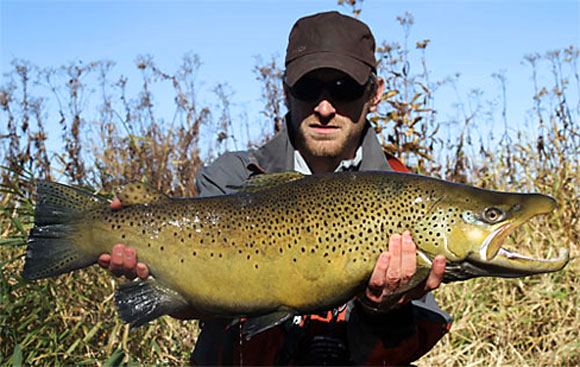
Landing big steelheads and browns

Derrick Kirkpatrick

Derrick Kirkpatrick of CTFishguides will give a presentation on fly fishing for large brown trout and steelhead in New York and Pennsylvania at the next regular meeting of Nutmeg TU Chapter 217 on Tuesday, Octt. 16.

The talk will cover proper dress and equipment, as well as the techniques needed to have a successful lake tributary outing.

The meeting will be held at 7:30 p.m. the third Tuesday of each month at the Fayerweather Yacht Club, 51 Brewster St. in the Black Rock section of Bridgeport. Free pizza.

Derrick’s background includes working for the Orvis Company and Cabelas.

He is pro-staffed by Hatch, Sage, Reddington, Rio, Hardy/Greys, St. Croix and Simms.

He attended Colorado guide school at the number one endorsed guide school in the country.  He also writes bi-weekly columns for The Fisherman magazine and has appeared in other magazines.

Catching big survivor trout

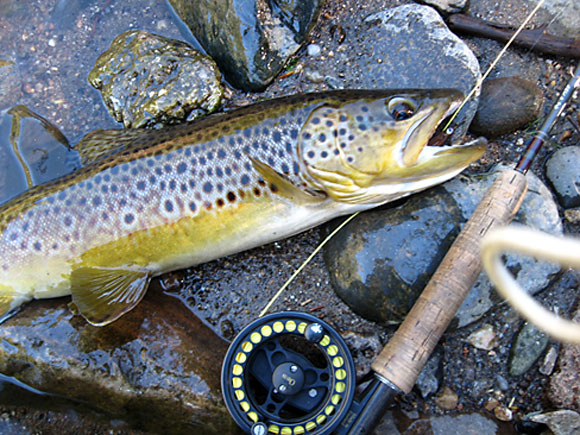
Our September 2012 meeting will feature a presentation by TU member Frank Plona, “How to Catch the Big Survivor Trout and Natives in the Farmington River and Other Places.”

Monthly meetings are held at 7:30 p.m. the third Tuesday of each moth at the Fayerweather Yacht Club, 51 Brewster St. in the Black Rock section of Bridgeport. Free pizza.

Frank, the information machine from the Farmington Valley, has agreed to drive down from Collinsville to give his take on situations that can put the fly angler in position to hook a real quality trout, the kind of trout can define your year on the water.

“The survivor brown trout in the Farmington are hard to catch, really hard,” Frank said. “My presentation gives a focus on situations where you can actually tie into that big one on the Farmington and other places as well.”

Beginners and intermediates may want to bring a note pad to the show. Expert anglers do not have to be embarrassed by the information they may not be taking advantage of.

Frank stressed, “I don’t represent any outfitter or guide service and I will not be selling anything at the meeting. This will be straight up info from one angler to the other. I will be bringing a fly donation for your raffle table. See you on the 18th.”