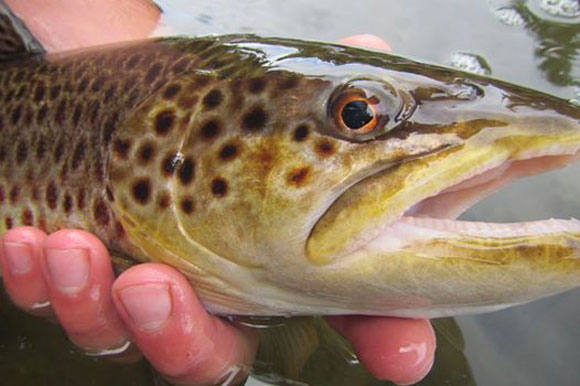
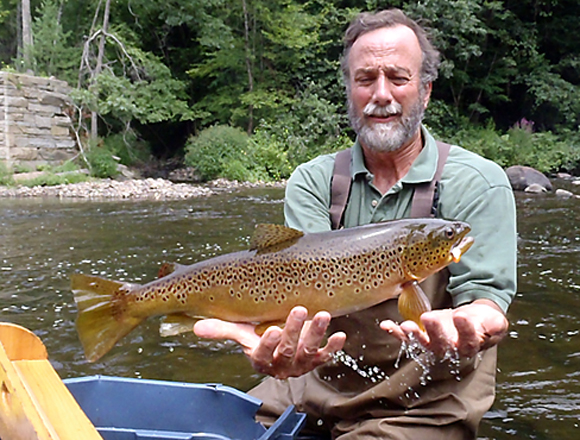
Mike Humphreys of the Department of Energy and Environmental Protection with a 22-inch wild brown on the Shepaug

DEEP biologist to speak March 24

Mike Humphreys of the Department of Energy and Environmental Protection with a 22-inch wild brown on the Shepaug

Mike Humphreys, the DEEP Inland Fisheries Biologist for the western district, will be the speaker at the March meeting of Nutmeg TU, set for Tuesday, March 24, at 7 p.m. at Port 5, 69 Brewster St., Bridgeport.

Mike is a longtime fish biologist, holding an master’s degree from the University of Tennessee with more than 30 years in his profession.

In past 25 years with the Connecticut Department of Energy and Environmental Protection, his work has focused on Statewide Stream Electrofishing Surveys, a Statewide Wild Trout Research and Management Project, and Housatonic River Research and Management.

Mike will be talking to us about his findings on trout survival with run of river in the Housatonic TMAs, various fish stocking programs, and regulation changes for some sections of the Mill River.


Next meeting to be held March 24

saint-patricks-day-clipartDue to the third Tuesday of this month falling on St. Patrick’s Day, March’s membership meeting will move to the fourth Tuesday of the month, March 24, 2015. This change only affects this March’s meeting.

Mike Humphreys DEEP Inland Fisheries Biologist for the western district, our district, will speak. Of most interest to our chapter, he will  present findings from his 5 year study of the effects on trout survival in the Housatonic TMAs from run of the river and different stocking programs, and changes in wild trout management areas, which will include planned changes to the regulations governing sections of the Mill River. Mike will also discuss the Farmington River.

This should be a most informative meeting. Please update your calendars with the change to March 24, 2015 for this meeting. The meeting starts at 7 p.m. at Port 5 in Bridgeport

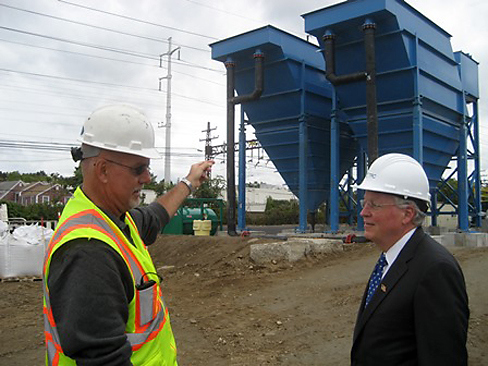
Barry Culp, senior project manager for TRC showing First Selectman Mike Tetreau the clarifiers at the clean up site.

Update on Mill River cleanup Feb. 26

Barry Culp, senior project manager for TRC showing First Selectman Mike Tetreau the clarifiers at the clean up site.

Fairfield First Selectman Mike Tetreau announced that the Town of Fairfield will host a public informational meeting regarding the Mill River Cleanup Thursday, Feb. 26, at 7:30 p.m., in the APR/Cafeteria at Mill Hill School, 635 Mill Hill Terrace. The snow date is March 2, at 7:30, at Mill Hill School. Any member of the public is encouraged to attend this meeting to hear an update on the cleanup efforts and to ask questions.

Click here to read more.

State seeks input on wildlife plan

Connecticut’s Department of Energy and Environmental Protection (DEEP) will be holding a series of informal meetings throughout the state to obtain public input as it updates the state’s Wildlife Action Plan, which serves as Connecticut’s blueprint for conservation action. The agency must complete a comprehensive review and revision every 10 years to make sure the Wildlife Action Plan reflects current needs and priorities for species of greatest conservation need and their habitats. The revised plan is due to the U.S. Fish and Wildlife Service by October 1, 2015.

Click here to read more.

Meeting Oct. 14 on Exide cleanup

Dredging more than 20,000 cubic yards of lead-contaminated soil from the Mill River is about to get underway now that a processing plant to clean the sediment has been installed on Exide’s 6.25 acres on the Post Road, according to the Fairfield Citizen.

TRC Environmental Corp. of Madison, Wisc., is doing the work for Exide, which is under orders from the state Department of Energy and Environmental Protection, to clean up the river that was polluted by waste from Exide’s now-closed battery factory over the years.

A public information meeting on the cleanup will be held Oct. 14 from 7 to 9 p.m. at the Board of Education conference room, 501 Kings Highway East.

Click here to read more

The DEEP found healthy populations of trout and smallmouth during electrofishing surveys of the Housatonic and Farmington Rivers (DEEP Photo)

Electrofishing surveys on Farmington, Housatonic

The DEEP found healthy populations of trout and smallmouth during electrofishing surveys of the Housatonic and Farmington Rivers (DEEP Photo)

The DEEP Inland Fisheries Division recently completed annual electrofishing surveys on the Housatonic and Farmington Rivers.

The trout and smallmouth are doing well, with some very impressive fish sampled, according to the DEEP.

Electrofishing is a non-lethal method to efficiently collect fish from a waterbody. In large rivers like the Farmington and the Housatonic, the sampling crew walk slowly upstream with 2 probes powered by a generator towed behind in a canoe. The stunned fish are netted and quickly transferred into “live cars”, large wood and wire containment boxes, which are kept downstream of the electrical field so the fish can recover.

Click here to see some photos on the DEEP Facebook page.

Trout stocking under way

Connecticut’s Department of Energy and Environmental Protection (DEEP) announced March 31 that expects to stock almost 390,000 trout in waters across the state in time for opening day of the trout fishing season April 19 despite challenges posed by extended winter conditions this year.

“Stocking nearly four hundred thousand fish prior to opening day is a monumental task in the best weather,” said Pete Aarrestad, director of DEEP’s Inland Fisheries Division. “We’ve had to postpone several days of stocking due to morning temperatures in the single digits, and a number of other scheduled stocking runs were shifted to sites with better winter access.

“However, we still plan to stock all of the usual water bodies that have historically been done for opening day.  Hatchery staff have endured and prevailed under prolonged winter conditions unseen in Connecticut in over 50 years. It is a testament to their ‘can do’ attitude and dedication on behalf of recreational anglers.”

More than 200 truckloads of trout are scheduled to be released into 100 lakes and ponds and 194 rivers and streams in time for opening day. The following species & sizes will be stocked prior to opening day:

• 62,600 brook trout (10-11 inch)

• 193,500 brown trout (10-11 inch)

• 6,600 brown trout (12 inch)

• 1,900 tiger trout (10-12 inch brook/brown hybrid)

• 107,300 rainbow trout (10-12 inch)

• 15,900 rainbow trout (12-14 inch)

• 1,335 surplus broodstock (3-10 pound trout – all species)

Trout anglers looking to test out their gear prior to the start of trout season can visit one of the state’s 15 trout management areas (TMAs), all open for pre-season catch-and-release fishing. TMAs are located on the Farmington River, Hammonasset River, Hockanum River, Housatonic River (two TMAs), Mianus River, Mill River (Fairfield), Mill River (Hamden), Moosup River, Pequabuck River (including Coppermine Brook), Naugatuck River, Salmon River, Saugatuck River, Willimantic River and Yantic River.

Typically, DEEP stocks nearly all these areas as soon as they are accessible by the hatchery trucks. This year, however, due to snow cover, frozen snow banks and shoreline ice cover, a number of the TMAs were inaccessible, thus stocking them had to be postponed. “Barring more winter weather, we plan on having most of the Trout Management Areas stocked by the end of next week,” said Aarrestad.

Anglers can access up-to-date information about where and when trout are stocked on Facebook at facebook.com/ctfishandwildlife.

In addition to the TMAs, class I wild trout management areas (WTMA) are also open year-round for catch-and-release fishing, and are located on Deep Brook, Eightmile River, Hawleys Brook, Beaver Brook/Merrick Brook, Macedonia Brook, Mill River (in Easton), Quinnipiac River, Tankerhoosen River, and Wachocastinook (Riga) Brook. Class I WMTA’s are typically not stocked. Additionally, downstream portions of six of the designated sea-run trout streams (Eightmile River, Farm River, Hammonasset River, Latimer Brook, Saugatuck River, and Whitford Brook) are open year-round with a two trout per day creel limit and a fifteen-inch minimum length.

Anglers should consult the Conncticut Angler’s Guide for detailed information on specific locations and angling regulations.  Printed versions of the 2014 Angler’s Guide are now available at more than 350 locations statewide, including town halls, bait & tackle shops and other vendors selling outdoor equipment, DEEP facilities, and commercial marinas and campgrounds. The electronic versions of the Guide can be found on the DEEP website at (ct.gov/deep/anglersguide).

Additional fishing and fisheries related information can be found on the DEEP web site at ct.gov/deep/fishing. The web site has a wealth of information including; trout stocking location maps, annual fish stocking summary report, the very popular youth fishing passport program, and when you catch the big one, criteria for trophy fish awards.

Save the last-minute running around and purchase your 2014 fishing licenses directly online, or if you prefer, at one of the many participating town halls, tackle retailers and DEEP offices. For a complete list of vendors, visit the DEEP website (ct.gov/deep/fishing) or call DEEP Licensing and Revenue (860-424-3105).

Changes coming to sea-run trout program

TU-SEA-RUN-210

By Ron Merly

State fisheries biologist Tim Wildman has not been happy with the number of annual returns of sea-run brown trout that are currently released into Connecticut estuaries. Seeforellen browns from Germany, which are indigenous to their lakes, are raised at Connecticut’s Kensington Hatchery and released into some lakes and reservoirs, but are also used for stocking sea-run brown trout as well. These fish do not have a dianadromous lineage: In other words, they do not run out to sea and return, they live in lakes.

Wildman resurrected the sea-run brown trout program in Connecticut in 2000 when he saw trout being destroyed as too many were being raised to release into the state’s waters. He took the excess fish and began releasing them into several estuaries around the state. (See the Flyfisher’s Guide to Connecticut for more info on where to find them).

After approximately 10 years of light returns, Wildman began to search European countries for natural strains of sea-run brown trout. There are many, however the standards for importing fish into this country are very strict so that diseases are not brought into our waters. After years of research and the convincing of his bosses, he has successfully imported a natural sea-run brown trout strain from a country that borders the Baltic Sea. Wildman asked that I not disclose the country so I will not.

This exciting change will begin to occur this year (2014), so returns should be seen in 2 to 3 years. These fish have a vast range that naturally covers an area about ths size of Long Island Sound. This strain of brown trout should return at an average of 6 to 8 pounds, but some grow as large as 15 pounds in the Baltic. Wildman hopes to establish significant returns of the browns and would like to see Connecticut become a sea-run trout fishing destination. Tim also said that not one fish was lost during the importation process so they appear to be a very hearty strain.

Lets keep our fingers crossed!! Thanks to Tim for all of his effort and we wish him well in this endeavor.